
Bronx County Criminal History Checks
Start with the question, not a person's name. A pending Bronx County criminal case belongs in WebCriminal. A finished case calls for a Certificate of Disposition from the court clerk. Current city custody belongs in the NYC Department of Correction lookup. Someone reviewing their own official New York history must use fingerprints through DCJS. These products overlap, but none replaces all the others.
Gather the full legal name, date of birth, known aliases, and any NYSID, docket, indictment, or Book and Case number before searching. A shared name is not proof of identity. Compare the court, dates, charge, and disposition. If a portal has no result, check whether the matter is complete, sealed, too new to appear, or held by a different custodian.
- Use WebCriminal for an open Bronx County court matter or calendar date.
- Call 311 for a very recent arrest, then use NYC DOC after a person enters city custody.
- Ask the NYPD Criminal Records Unit for routine complaint verification or use NYC OpenRecords for broader agency material.
- Request a Certificate of Disposition from Bronx Criminal Court or Bronx Supreme Court for a clerk-certified outcome.
- Order a fingerprint-based DCJS Personal Record Review when auditing your own statewide rap sheet.
Note: A blank web search is not clearance because sealed, finished, delayed, and warrant records may be absent from public results.
Four Bronx County Record Channels
Four official routes answer four different questions. WebCriminal reports public pending court appearances. OCA Criminal History Record Search, or CHRS, checks public court history by exact name and date of birth. DCJS Personal Record Review is the subject's fingerprint-linked state history. NYC DOC shows current city custody after intake. The distinction is vital in Bronx County because police, courts, city correction, and the state repository each own part of the record.
| Channel | Best use | Main limit |
|---|---|---|
| WebCriminal | Pending cases and calendars | No warrants, sealed, or completed cases |
| OCA CHRS | Public statewide court search | Exact demographic match, not fingerprints |
| DCJS review | Your official New York rap sheet | Subject or attorney access |
| NYC DOC lookup | Current city custody | Not a full arrest archive |
The route also changes with custody level. NYC DOC covers local pretrial detention, DOCCS covers state prison, and the Federal Bureau of Prisons covers federal custody. Search the system that holds the person now.
Official Background Checks in New York
The New York State Division of Criminal Justice Services is the central criminal-history repository. It does not offer a public name search for another person's rap sheet. A Bronx County resident may review their own record by booking an IdentoGO fingerprint appointment. Service code 15464Z orders a suppressed response; 15465F orders an unsuppressed response. The posted fee is $17.50, one accepted identity document is required, and DCJS generally mails results in three to four weeks.
The unsuppressed response is the stronger self-audit because it can include categories hidden from the suppressed copy, such as sealed dismissals, certain violations, discretionary seals, and youthful-offender adjudications. DCJS sends challenge instructions with the result. Bronx County residents who find a missing outcome can obtain a court certificate and use the agency's correction process. Fee-waiver instructions are available from the Records Review Unit.
The DCJS Personal Record Review page shows the official fingerprint request instructions.
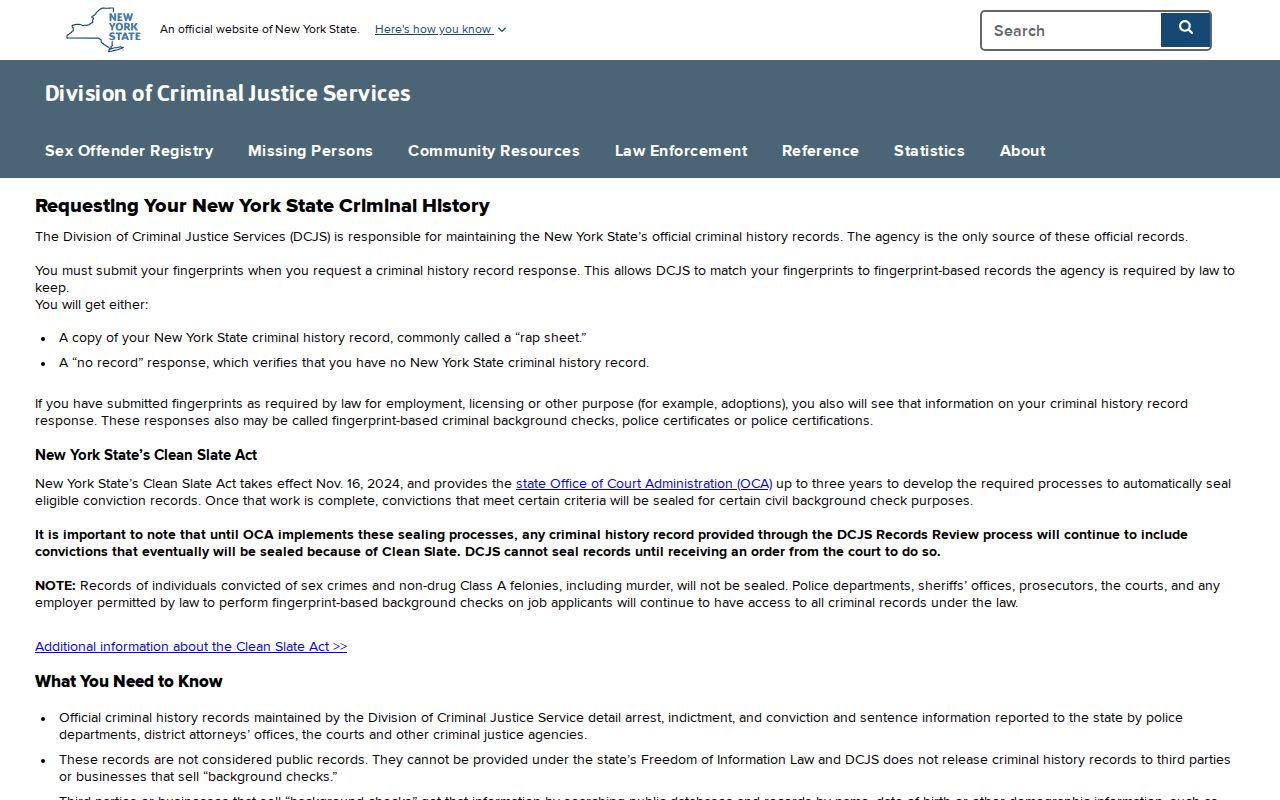
The captured instructions reinforce that this is a personal, fingerprint-based state record review, not an open name lookup.
Bronx County Fingerprint Record Review
At enrollment, choose the DCJS service code that matches the response wanted, then select a location, date, and time. The appointment collects legal name, contact, and biographic details. Payment may be made by credit card, check, or money order to Idemia. Results arrive by U.S. mail and cannot be picked up. A person who wants both suppressed and unsuppressed versions must order each one.
The IdentoGO enrollment screen begins with the New York service code.
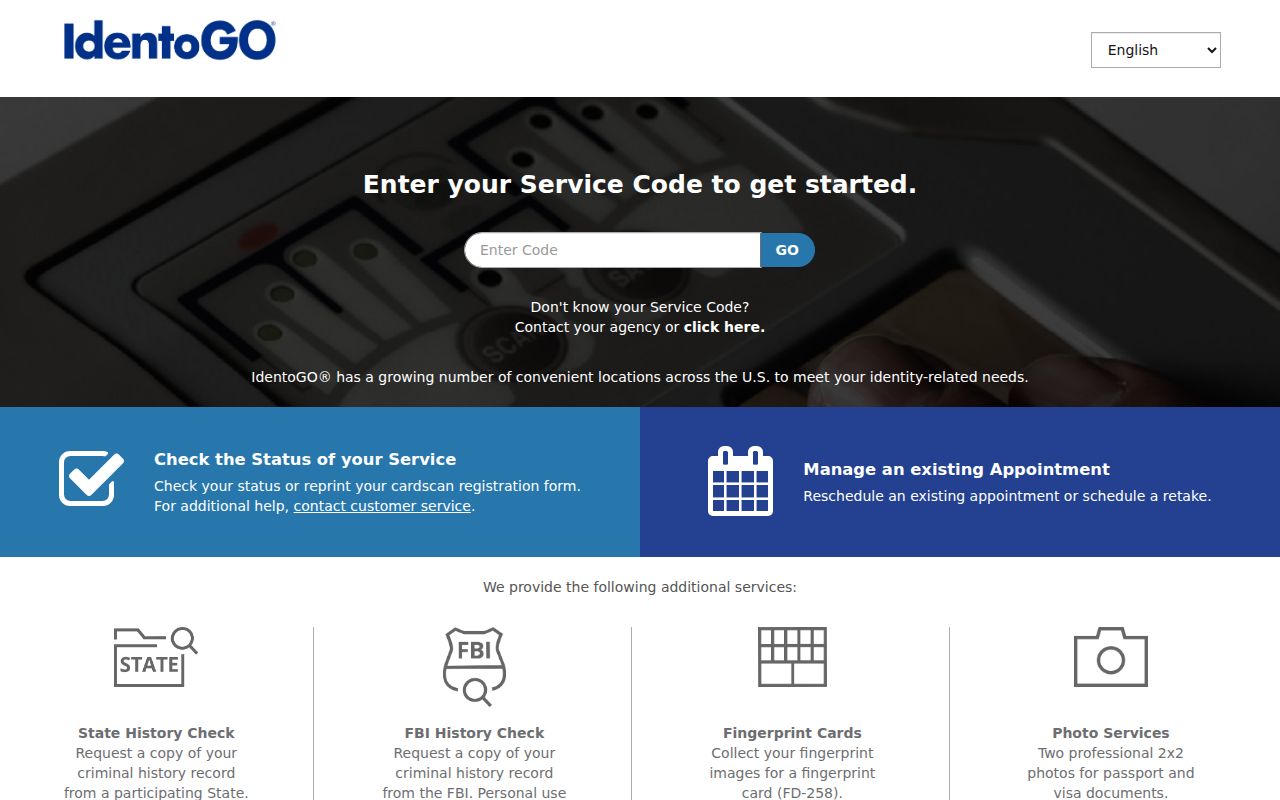
Entering the correct code prevents a Bronx County self-review request from being routed to a different fingerprint service.
| Official product | Method and scope | Base fee |
|---|---|---|
| DCJS Personal Record Review | Fingerprints; official New York history | $17.50 |
| OCA CHRS | Exact name and DOB; public court records | $95 |
| NYPD Certificate of Conduct | Fingerprints and photo; five boroughs | $50 |
| FBI Identity History Summary | Fingerprints; FBI-maintained history | $18 |
Kinds of Criminal Records
A Bronx County criminal record is not one file. NYPD creates complaint and arrest material. NYC DOC creates booking and current-custody data after admission. Prosecutors and court clerks maintain charges, calendars, motions, orders, pleas, and dispositions. DCJS links qualifying arrest cycles to fingerprints. DOCCS maintains state prison and post-release supervision records. The registry is another DCJS product governed by SORA.
Use the record type to choose its custodian:
- Police records: NYPD complaint verification, aided reports, arrest reports, and broader FOIL material.
- Court records: Bronx Criminal Court files for misdemeanors and early felony proceedings, then Supreme Court files after indictment.
- Custody records: NYC DOC for city detention, DOCCS for state prison, and BOP for federal imprisonment.
- State histories: DCJS fingerprint-linked rap sheets and OCA's separate public court-history product.
- Supervision and registry records: NYC Probation, DOCCS Community Supervision, and the New York State Sex Offender Registry.
Warrants require special care. No official public Bronx County active-warrant name search was found, and WebCriminal omits them. The issuing clerk and defense counsel are the sound route for a person's own concern.
Bronx County Arrest Record Flow
A qualifying arrest starts with NYPD or another authorized agency. Fingerprints and the arrest event move to DCJS, which assigns or matches an NYSID and returns identification data to the arresting agency, prosecutor, and courts. The Bronx District Attorney then decides which charges to file. The police charge can be declined, reduced, replaced, or expanded before arraignment.
The local flow is: Arrest and fingerprints → DCJS identity match → Bronx DA screening → Criminal Court arraignment → misdemeanor case or felony indictment → disposition and sentence reported to DCJS. If a person is detained after arraignment, NYC DOC adds a Book and Case number. A state-prison sentence later creates a DOCCS record.
This reporting chain explains why sources can disagree for a time. A new arrest may not yet be in WebCriminal. A released person may never enter the NYC DOC locator. A clerk correction may not reach DCJS at once. Compare identifiers and obtain the final disposition instead of assuming one result tells the full story.
Bronx County Criminal Records: What They Contain
A DCJS rap sheet organizes data by identity and arrest cycle. A court file adds the documents and events used to decide the case. A booking result focuses on current custody. Names alone are weak identifiers, so match the NYSID, docket, indictment, Book and Case number, dates, court, and charge outcome when those fields are available.
| Name and identifiers | Legal and other names, date of birth data, NYSID, fingerprints, docket, indictment, or custody identifiers. |
|---|---|
| Arrest and booking | Arrest date, agency, intake details, Book and Case number, facility, and release or bail status. |
| Charges and statutes | Police arrest charges, prosecutor-filed charges, indictment information, and cited New York law. |
| Case events | Arraignment, calendar appearances, motions, hearings, plea, trial, orders, and counsel appearances. |
| Disposition | Dismissal, ACD, acquittal, conviction, or another formal outcome for each charge. |
| Sentence and supervision | Sentence, incarceration, probation, parole, post-release supervision, and certificates of relief where authorized. |
Grand-jury material, victim data, full personal identifiers, sealed proceedings, and youthful-offender matters are not ordinary public fields. A free case view also may not provide pleadings, transcripts, or exhibits that can be requested from the clerk.
Bronx County Courthouse Record Corridor
Bronx County criminal records cluster around East 161st Street. NYC Criminal Court at 215 East 161st Street handles misdemeanors, violations, arraignments, and felony preliminary proceedings. Bronx Supreme Court, Criminal Term, at 265 East 161st Street handles indicted felonies. The Bronx District Attorney and probation operations are nearby. This is a city and state court system, not a county-government campus.
Bronx Criminal Court
215 East 161st Street
Bronx, NY 10451
718-618-2400
Clerk: 718-618-2460
Bronx Supreme Court
265 East 161st Street
Bronx, NY 10451
718-618-3100
Central Clerk: 718-618-3000
NYPD Records Unit
One Police Plaza
New York, NY 10038
718-610-8457
Mail or online delivery
Bronx District Attorney
198 East 161st Street
Bronx, NY 10451
718-590-2000
The landmark courthouse at 851 Grand Concourse houses the County Clerk and archives but should not be mistaken for the main criminal courthouse. Its Bronx County archive begins with the county's creation in 1914.
New York Public Access Laws
New York Freedom of Information Law applies to executive agencies such as NYPD, NYC DOC, and the Department of Probation. It does not turn the judiciary into a FOIL agency, so a Bronx County court file goes through the clerk and court rules. DCJS also states that official criminal-history information is restricted and cannot be obtained through FOIL. Use the agency's routine form first, OpenRecords for other executive-agency files, and court procedures for dockets or certificates.
Key statutes:
Public Officers Law §87 allows agency access subject to privacy, safety, enforcement, and other exemptions.
CPL §160.50 generally seals a criminal action after a favorable termination.
CPL §160.57 creates phased automatic Clean Slate sealing for eligible convictions.
CPL §160.59 permits an application to seal up to two eligible convictions.
Correction Law Article 6-C controls sex-offender registration, public access, duties, and misuse.
FOIL acknowledgment is generally due within five business days, but that is not a five-day production promise. Paper copies up to 9 by 14 inches ordinarily may cost no more than 25 cents per page; other formats may carry actual reproduction cost.
Bronx County Warrant Record Gaps
No official public Bronx County active-warrant search by name was located. WebCriminal expressly excludes warrants. NYC DOC can display CCW or OJCW for a person already in custody, but its locator is not a warrant database. The NYC Sheriff handles specified civil process and civil warrants, not a general list of Bronx criminal warrants.
If the concern is your own possible bench warrant, identify the issuing court and docket, then speak with defense counsel and the Bronx Criminal or Supreme Court clerk. Counsel can help arrange a surrender or calendar appearance when needed. Bring identification and case details, obtain written proof of recall or disposition, and allow time for enforcement databases to update. Do not use 911 for a routine inquiry; 311 can route general questions.
Warrant types differ. A bench warrant usually follows a failure to appear or comply. An arrest warrant authorizes custody on judicial probable cause. A search warrant authorizes a search of a place or item and may remain sealed during an investigation.
Restricted, Sealed & Expunged Records
New York mainly uses record sealing. Favorable terminations generally seal under CPL 160.50, while qualifying noncriminal dispositions use CPL 160.55. Juvenile and youthful-offender records are confidential. Personal data, victim or minor information, grand-jury evidence, active investigative material, and safety-sensitive details also may be withheld. Even when part of a Bronx County court history is public, the DCJS rap sheet remains restricted.
CPL 160.59 allows an application to seal up to two eligible convictions, with no more than one felony, after ten years from the later of sentence or release under the statute's calculation. The applicant cannot have a pending case, and several serious offense groups are excluded. In New York City, obtain a $10 Certificate of Disposition for each case, complete and notarize the motion papers, serve the Bronx District Attorney, and file in the proper court. There is no filing fee. The prosecutor has 45 days to object.
Clean Slate took effect on November 16, 2024. Eligible misdemeanors generally wait three years and eligible felonies eight years after sentence or release, with no pending New York charge or current probation or parole. OCA has through November 16, 2027 to process older eligible cases. Sealing does not erase DNA or DMV records, debts, restitution, or fines.
Bronx County Custody and Supervision Records
Bronx County has no county jail. NYC DOC manages city custody, mainly at Rikers Island facilities with official East Elmhurst addresses. A new arrestee may remain in NYPD custody until arraignment, and the city lookup begins only after DOC admission. For the first 24 to 72 hours, 311 is often the better route. A state-prison sentence belongs in the DOCCS locator, while federal custody belongs in the BOP system.
The DOCCS Incarcerated Lookup is the official state-prison search.
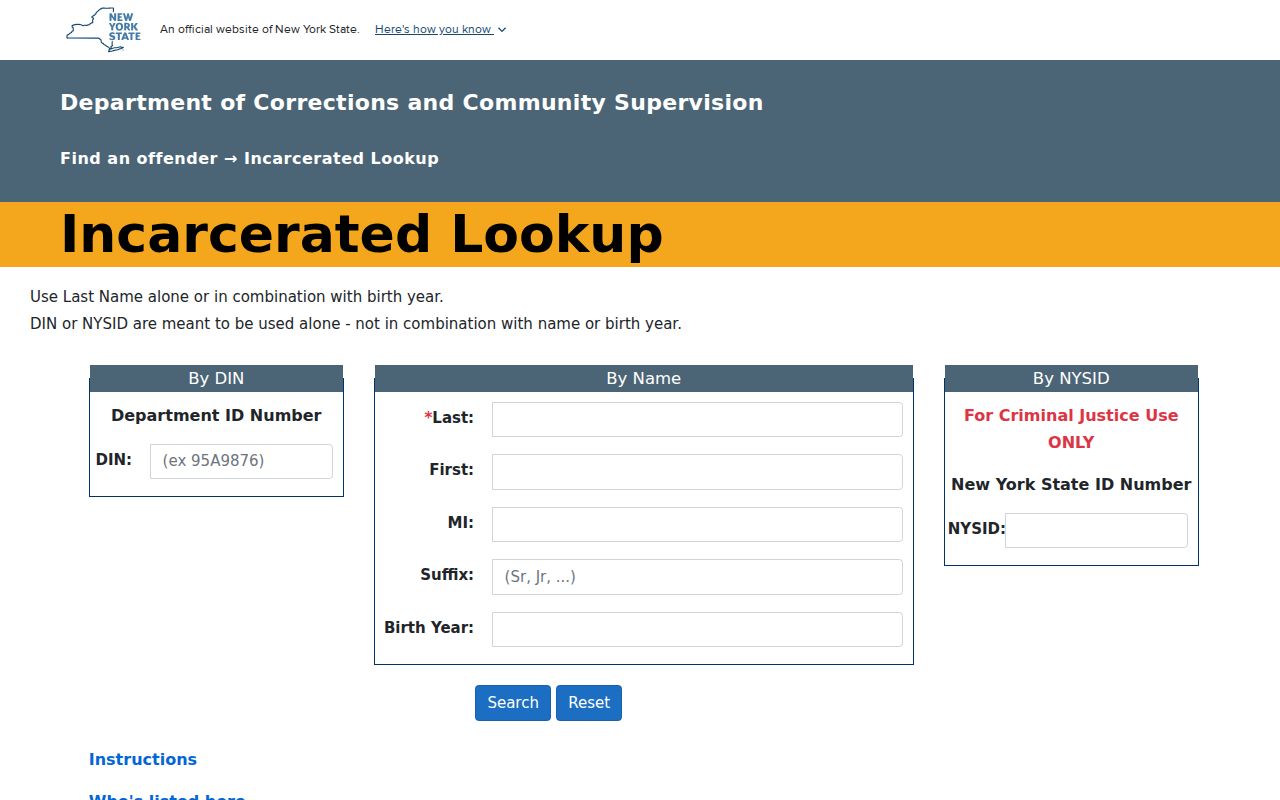
Its result is a custody record, not a full Bronx County criminal history, and statutory exclusions can remove some completed nonviolent cases.
Probation and parole also split by government level. NYC Department of Probation handles Bronx probation casework. DOCCS Community Supervision handles parole and post-release status. The DOCCS Parolee Lookup accepts an NYSID, DIN, name, and birth year.
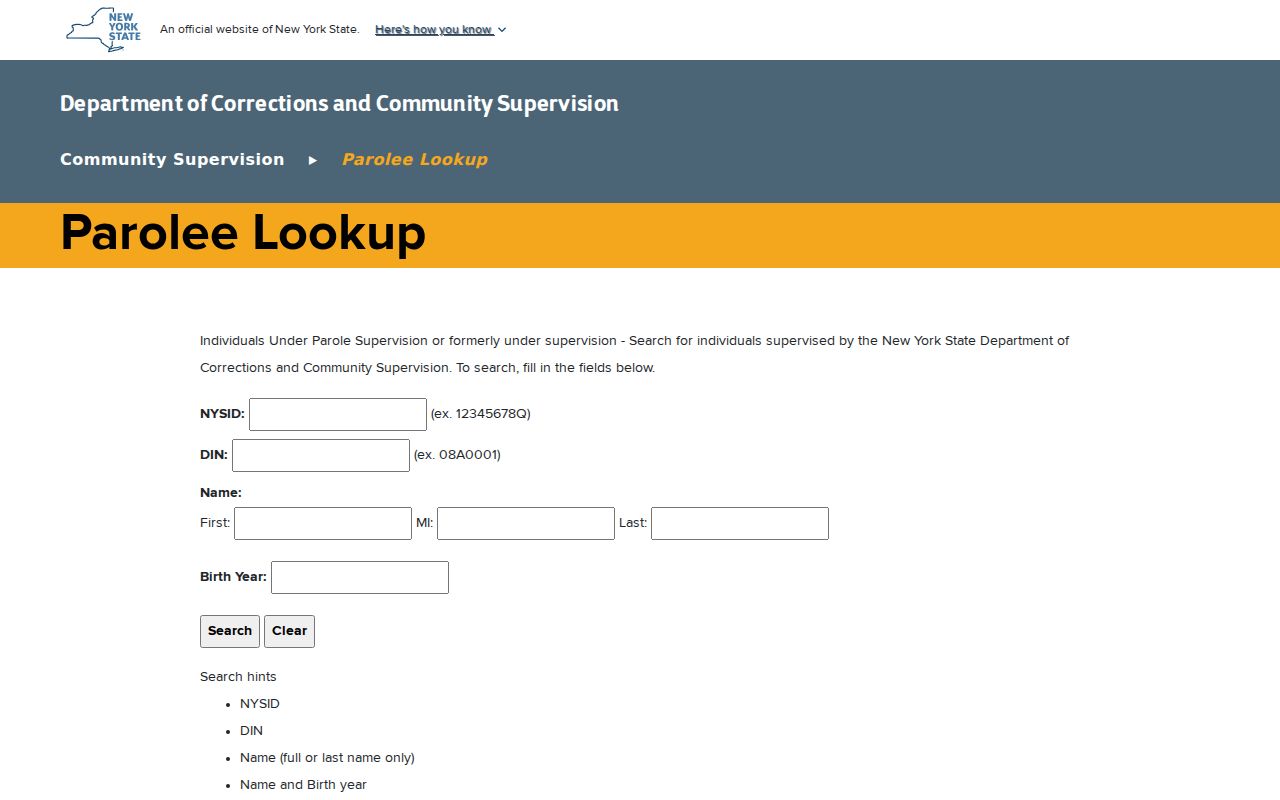
The supervision result covers a narrow public status slice and does not expose confidential case notes, treatment data, or every earlier offense.
City-by-City Criminal Records in Bronx County
There is no top-three city list inside Bronx County. The county is coterminous with the Borough of the Bronx, one of New York City's five boroughs. Its neighborhoods and 12 community districts are not incorporated cities. Police records remain with NYPD, and Bronx Criminal Court and Supreme Court replace the municipal-court model found elsewhere. The single borough profile keeps that exception clear.
Bronx Record Check
Borough of the City of New York · NYPD precinct, Bronx court, custody, and CompStat routes
Neighborhood names such as Mott Haven, Fordham, and Riverdale should not be used as city jurisdictions. The correct local police starting point is the NYPD precinct serving the incident location.
Bronx County Case Data in Context
The Bronx District Attorney's 2024 report counted 48,112 NYPD arrest submissions to the office. Fifty-eight percent carried a misdemeanor top arrest charge, 19 percent a violent-felony top arrest charge, and 23 percent another felony. Those are intake categories, not case outcomes. The prosecutor may decline or change the charge, and the court may later dismiss the matter, grant an ACD, accept a plea, or reach a verdict.
Separate borough data reported 30,624 seven-major crime incidents in 2024, including 9,170 grand larcenies and 8,551 felony assaults. Incident totals do not equal the number of people with Bronx County criminal records. The DA's dashboards offer aggregate views from arraignment forward and allow charge or outcome filters, but they cannot identify a person.
The distinction appears in disposition data too. The DA reported that 68 percent of dispositions were dismissals or adjournments in contemplation of dismissal. That gap is why an NYPD arrest record cannot prove conviction. For an individual outcome, use the clerk's disposition certificate or the public case channel that fits the case stage.